Plant communities of seasonal clay-based wetlands of south-west Australia: weeds, fire and regeneration

Kate Brown and Grazyna Paczkowska

Key words: regeneration, fire, seasonal wetlands

 While the majority of seasonal wetlands in south-west Australia are connected to regional ground water, some found on clay substrates rely solely on rainwater to fill. These seasonal clay-based wetlands fill with winter rains and are characterised by temporally overlapping suites of annual and perennial herbs that flower and set seed as the wetlands dry through spring. Over summer the clay substrates dry to impervious pans. The seasonal clay-based wetlands of south-west Australia comprise a flora of over 600 species, of which at least 50% are annual or perennial herbs, 16 occur only on the clay-pans and many are rare or restricted.

These ecological communities are amongst the most threatened in Western Australia and have recently been listed under the Commonwealth Environmental Protection and Biodiversity Conservation Act as critically endangered. Over 90% have been cleared for agriculture and urban development and weed invasion is a major threat to those that remain. South African geophytes are serious weeds within these communities and Watsonia (Watsonia meriana var. bulbillifera) in particular can form dense monocultures and displace the herbaceous understorey.

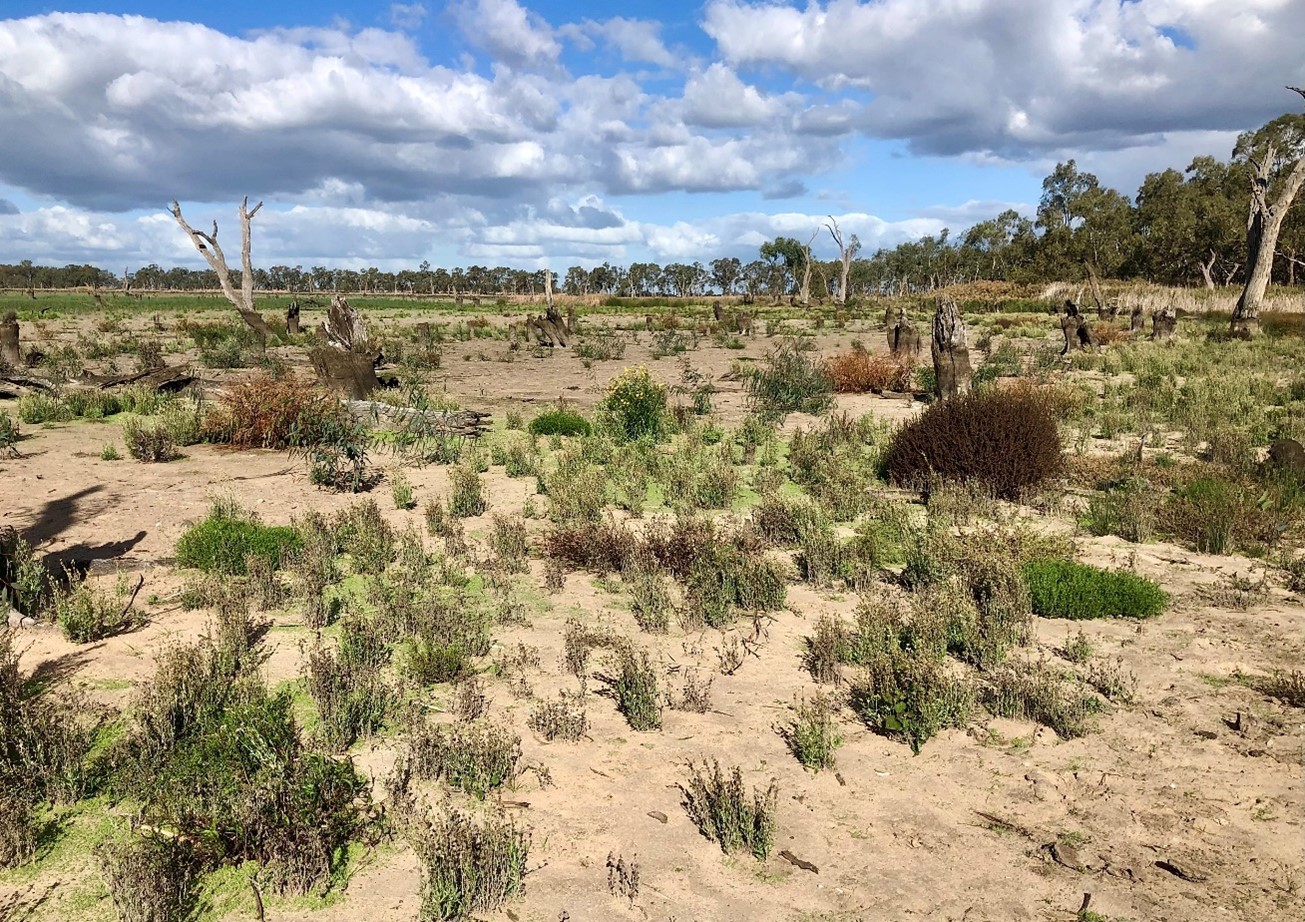
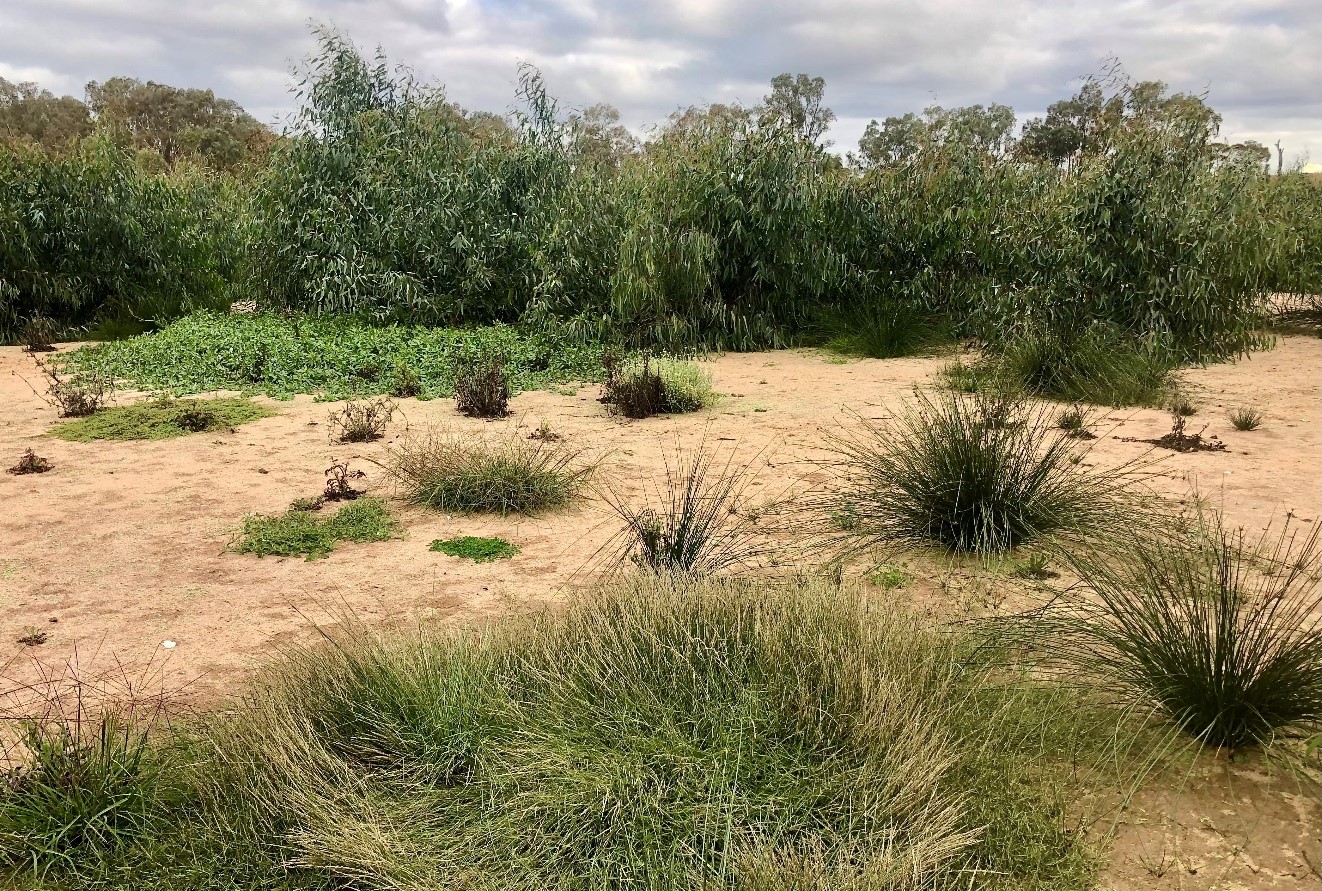
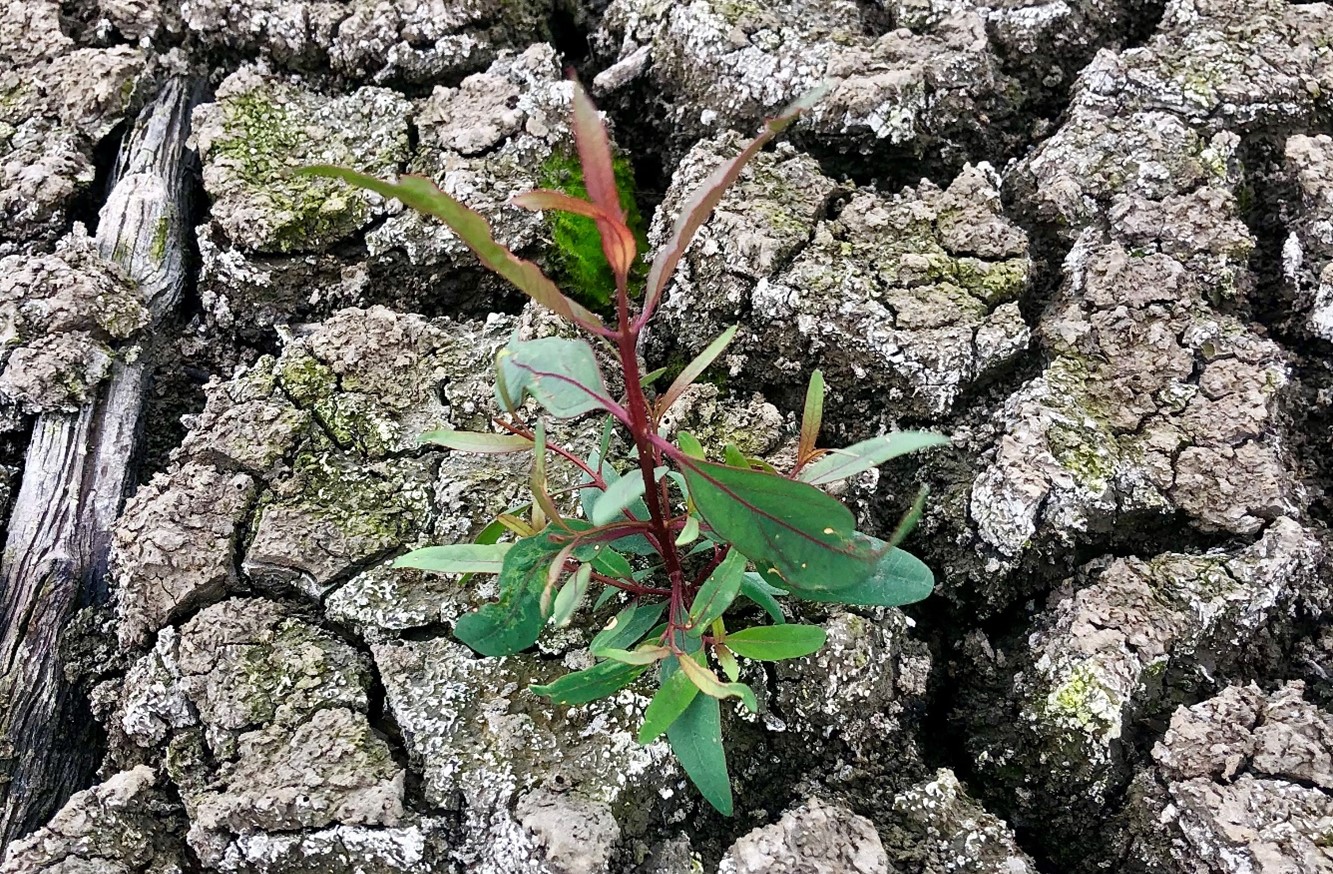
Watsonia invading  a seasonal clay-based wetland

Watsonia invading a seasonal clay-based wetland

Regeneration following weed control and fire.  We investigated the capacity of the plant community of such a wetland to regenerate following removal of Watsonia, and the role of fire in the restoration process.

 Our study site, Meelon Nature Reserve, is a remnant clay-based wetland on the eastern side of the Swan Coastal Plain 200 km south of Perth. A series of transects were established in August 2005 and regeneration of plant community following Watsonia control and then unplanned fire was monitored until September 2011 (Table 1).

 Table 1: Six years of monitoring regeneration of a seasonal wetland at Meelon Nature Reserve

August 2005 Thirty 1m x 1m  quadrats established along five 30m transects in the wetlands where Watsonia was estimated to average greater that 75% cover.
September 2005 Cover ( modified Braun Blaquet) recorded for all native and introduced taxa and then Watsonia treated with the herbicide 2-2DPA (10g/L) + the penentrant Pulse® (2.5 mL/L).
September 2006 Cover recorded for all native and introduced taxa and then Watsonia treatment reapplied.
February 2007 Unplanned wild fire burnt across the study site.
September 2007  each year until September 2011 Cover recorded for all native and introduced taxa and then any Watsonia treated.

Analysis of similarity (ANOSIM) was undertaken to determine if there was significant change in species cover and composition from before Watsonia control to six years following the initial treatment. A  SIMPER analysis was used to ascertain the contribution of each species to any changes between monitoring years (Clarke & Gorley 2006).

Results. In the first year of the control program, a 97% reduction in the cover of Watsonia was recorded, but was associated with no significant change in the diversity or abundance of native flora. In February 2007, 18 months after the initial control program, an unplanned summer wildfire burnt through the reserve. In September 2007 monitoring revealed a significant increase in cover and diversity of native species in the treatment areas. Some species such as the Dichopogon preissii had not been recorded before the fire, others, such as the native sedges, Cyathochaeta avenacea and Chorizandra enodis increased greatly in cover following the fire. At the same time there was no resprouting of Watsonia or recruitment from cormels or seed.

Six years after the initial treatment the native sedges and rushes continue to increase in cover, the dominant native shrub Viminaria juncea is increasing, Eucalyptus wandoo seedlings are recruiting into the site and native grasses and geophytes are increasing in cover. The indications are that plant communities of the seasonal clay-based wetlands of south-west Australia have the capacity to recover following major weed invasion and that fire can play a role in the restoration process.

Table 2. Species that contributed to 90% of the significant change in cover and composition of species between 2005 and 2011.


2005

2011

Species

Average abundance (% cover)

Average abundance (% cover)

Cyathochaeta avenacea

10.0

23.5

Chorizandra enodis

2.3

15.7

Viminaria juncea

2.1

15.4

Caesia micrantha

2.6

2.7

Briza sp. Meelon

3.1

2.0

Eucalyptus wandoo

0.0

3.0

Austrodanthonia acerosa

0.4

1.8

Hypoxis occidentalis

0.0

1.9

Lepidosperma sp. WT2Q5 Meelon

0.1

1.3

Meeboldina sp. MU3 Meelon 2011

0.2

1.4

Dichopogon preissii

0.0

1.3

Drosera rosulata

1.5

0.2

Contact: Kate Brown, Ecologist, Swan Region. Department of Environment and Conservation, PO Box, 1167 Bentley Delivery Centre, WA, 6983. Email: kate.brown@dec.wa.gov.au

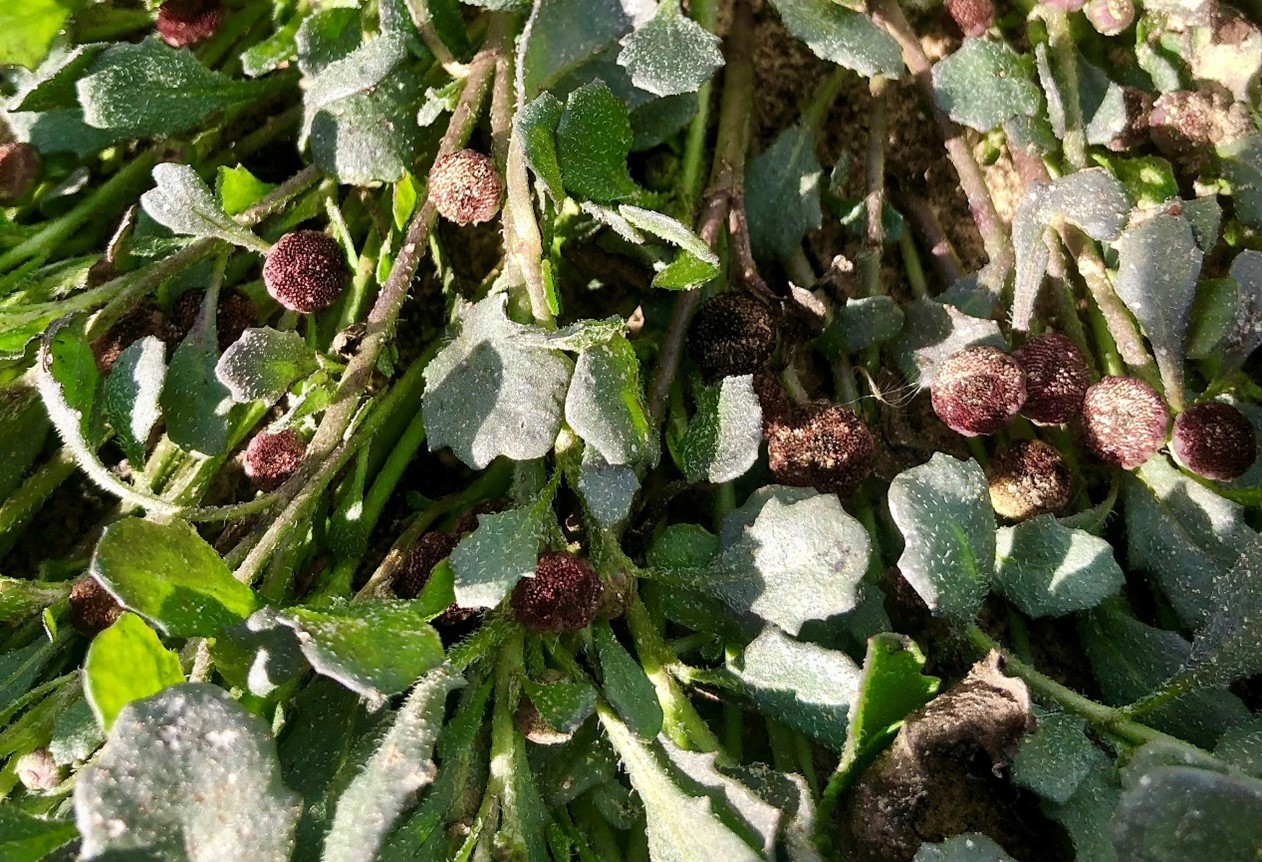
Chorizandra enodis

Chorizandra enodis

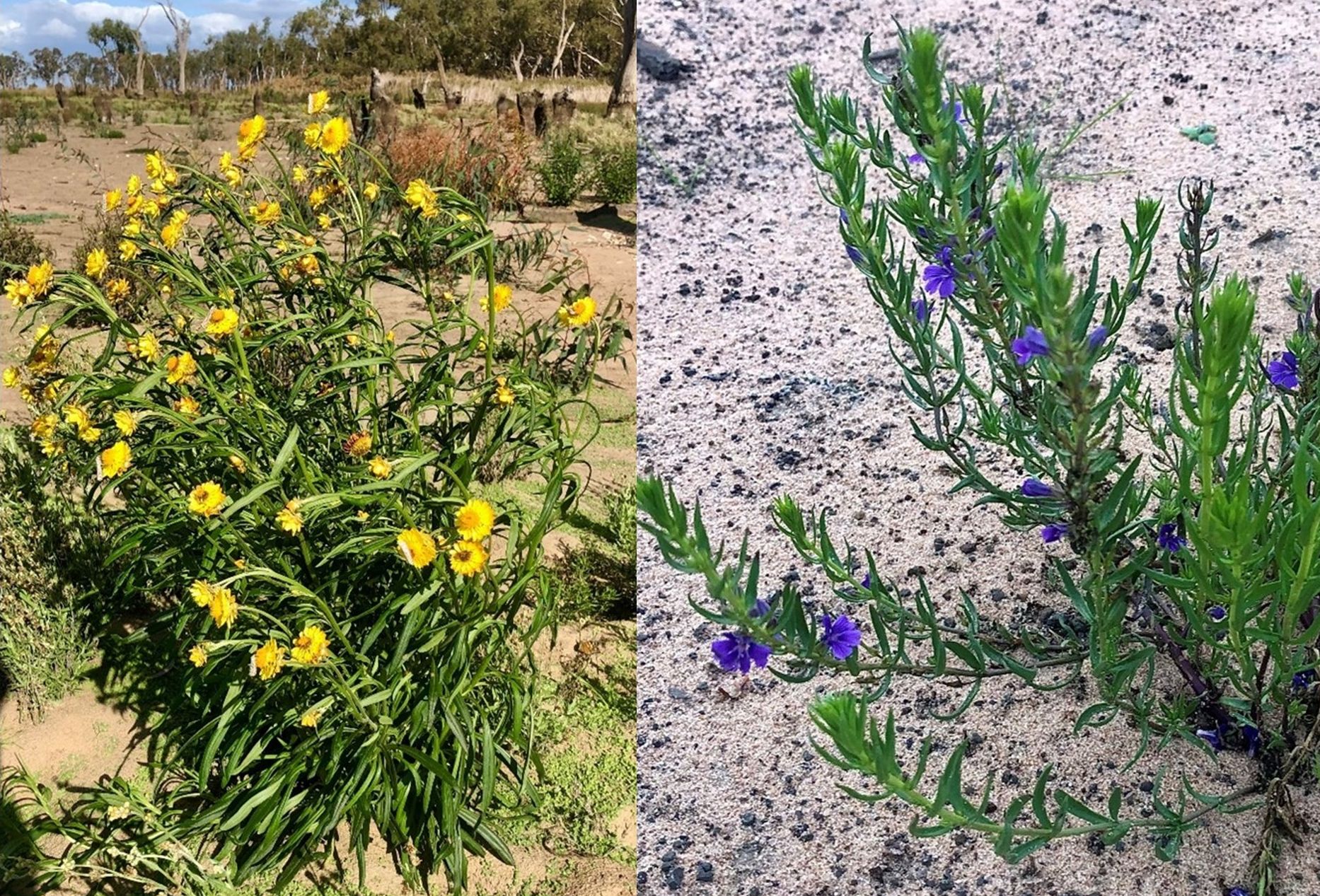
Dichopogon preissii

Dichopogon preissii

Hypoxis occidentalis

Hypoxis occidentalis

Slopes2Summit Bushlinks Project

Keywords – landscape, connectivity, restoration, revegetation, NSW southwest slopes

The Slopes2Summit (S2S) Bushlinks project commenced in August 2012 and is in the first stage of implementing on-ground works to build landscape-scale connectivity across private lands in the southwest Slopes of NSW – from the wet and dry forest ecosystems of the upper catchment and reserves to the threatened Grassy Box Woodlands of the lower slopes and plains (Fig 1.).

Fig 1. Map of the S2S area and priority landscapes for Bushlinks

Fig 1. Map of the S2S area and priority landscapes for Bushlinks

The increasing isolation of plant and animal populations in “island” reserves scattered through an agricultural landscape is a recognised threat to the long term viability and resilience of ecosystems under potential impact of climate change. If we can increase the viable breeding habitat through off-reserve remnant conservation, and increase the habitat for dispersal by increasing connectivity, we may be able to influence the trajectory for some of our species – the Squirrel Glider (Petaurus norfolcensis)) and threatened woodland birds in particular.

The S2S Bushlinks Project is attempting to address connectivity issues through the following approaches:

1. Cross property planning. Foster and encourage cross property planning for habitat connectivity between neighbours, community, Landcare and/or subcatchment groups resulting in more integrated on-ground works projects, and raising awareness of the benefits of connectivity for wildlife.

2. On-ground investment in connectivity. The project is partnering with farmers and land managers to support and encourage fencing and revegetation in strategic places in the landscape with the objective of increasing habitat connectivity.  S2S Bushlinks applies scientific principles to the site assessments and evaluation, which then sets the level of investment in a site.  High scoring sites receive the highest rates of rebate, but the provision of low levels of public investment in sites that may not be of high priority is important for fostering participation in revegetation of any sort to encourage the culture of caring for the land.

Site assessment and scoring for funding level uses the following criteria:

  • Connectivity and landscape value – Does the site link to or create new patches of habitat according to principles of habitat connectivity? (Fig 2)  Is there existing vegetation in 1000ha radius around the site in an optimal range of 30-60%?
  • Area : perimeter ratio – Bigger blocks of revegetation are more cost-efficient and better habitat than linear strips of revegetation, and the project scoring encourages landholder to go bigger and wider in order to qualify for a higher level of funding.
  • Habitat Values – Does the site have existing values like old paddock trees, rocky outcrops or intact native ground layer, and therefore become a more valuable site? Is it in the more fertile, productive parts of the landscape and therefore of more productivity benefit for wildlife as well?
  • Carbon value – The scoring is based on the size of the revegetation and rainfall zone. The CFI Reforestation tool is being used to value the collective potential carbon sequestration of the Bushlinks project.

The emphasis on cross-property planning flows through to the implementation of on-ground works. Landholders are encouraged to work with neighbours and the site evaluation system is used to assess site value without the property boundaries – cooperation makes the site bigger and usually increases the connectivity value, and therefore scores higher.

3. Review and adaptive management process. The site assessment is to be reviewed in July 2013 against the objectives – did it work to prioritise sites well – did we invest wisely? The scientists and experts are then able to work closely with Holbrook Landcare to adjust the project eligibility, assessment and evaluation criteria to continually improve the outcomes in subsequent funding years.

4. Monitoring framework. As part of the in-kind contribution to the project, S2S partners Dr Dave Watson, CSU Albury and Dr. Veronica Doerr, CSIRO are working towards a framework for the long-term monitoring of landscape scale connectivity for continental-scale initiatives like Great Eastern Ranges (GER).  As part of a GER Environmental Trust Project in 2013, an expert panel workshop will be convened to begin this process in 2013.

The framework will then be used to pilot a project-scale design for Bushlinks, which will allow us to measure ecological outcomes.

Bushlinks will contribute to the Slope2Summit portal of the Atlas of Living Australia, supported by the Slopes2Summit facilitator. To develop community participation in monitoring and evaluation, participants and the wider community will be encouraged to contribute wildlife sightings and other data to the atlas.

The S2S partnership applied for funds through the Australian Governments Clean Energy Futures Biodiversity Fund in 2011 and was successful in the 2011/12 funding year for a six year project. Holbrook Landcare Network is managing the S2S Bushlinks Project on behalf of the Slopes2Summit and the Great Eastern Ranges Initiative, in partnership with Murray CMA.

Contact: Kylie Durant, Bushlinks Project Officer, Holbrook Landcare Network, PO Box 121 Holbrook, NSW 2644 Australia. Tel: +61 2 6036 3121

Fig 2. Summary of the connectivity model outlined in Doerr, V.A.J., Doerr, E. D and Davies, M.J. (2010) Does Structural Connectivity Facilitate Dispersal of Native Species in Australia’s Fragmented Terrestrial Landscapes? CEE Review 08-007 (SR44). Collaboration for Environmental Evidence: www.environmentalevidence.org/SR44.html

Fig 2. Summary of the connectivity model outlined in Doerr, V.A.J., Doerr, E. D and Davies, M.J. (2010) Does Structural Connectivity Facilitate Dispersal of Native Species in Australia’s Fragmented Terrestrial Landscapes? CEE Review 08-007 (SR44). Collaboration for Environmental Evidence: http://www.environmentalevidence.org/SR44.html

Fig 3. Revegetation in the farming landscape in the Southwest Slopes of NSW

Fig 3. Revegetation in the farming landscape in the Southwest Slopes of NSW


West Hume Landcare Group – Taking stock, 24 years on

Judy Frankenberg

Key words: agricultural landscape restoration, community involvement, salinity, threatened species

The West Hume Landcare Group was formed in 1989 as a community response to land degradation in the area. Funding to employ a coordinator for three years was obtained in 1990. This enabled a high level of project activity in addition to tree planting, including a roadside vegetation survey, farm planning workshops, demonstration sites for ground water recharge and discharge management, and perennial pasture establishment. In the first 5 years of its existence, the group organised nearly 250 different events, attracted funding of over $500,000 and managed 17 different projects.

The second 5 years saw a period of consolidation – then, from late 1997, the employment of a full time project officer enabled  the development of a Land and Water Management Plan.  By early 2000 the Group had attracted a total of $1,000,000 in project funding over 11 years.

“Taking Charge of Recharge” was the largest project undertaken by the West Hume Landcare Group, commencing in 2001. It involved 80 properties, with a total of 170,009 local trees and shrubs planted on 370 ha.  Some 93 ha of remnant vegetation were fenced over the two years of the project. This project was the climax of a very busy 12 years of the Landcare Group’s life, during which 400,000 trees and shrubs were planted in a wide variety of projects across the landcare area – in addition to direct seeding and natural regeneration.  This revegetation had a variety of purposes, including recharge and discharge management, corridor linkages between remnants, vegetation connections specifically designed to strengthen the local (threatened) Squirrel Glider (Petaurus norfolcensis) population, and livestock shelter.

Many of the planting projects initially involved only small numbers of trees, with a low proportion of shrubs.  They were important in giving landholders confidence that tree planting was a credible farm management activity and in their ability to succeed in species selection and establishment.  The Landcare group provided a lot of support in species selection, and, as the demand for shrubs grew, the nurseries responded by increasing their availability.

Nearly all revegetation in West Hume has used local species, and as far as possible these were grown from locally sourced seed.  The diversity of shrub species used increased over the years as knowledge and availability of the local flora improved.

Roadside survey. Local knowledge was greatly increased following the roadside survey carried out by 38 landholder volunteers.  They surveyed 460 km of road, recording floristics, conservation value and causes of degradation.  A total of 111 native species were recorded, including 28 shrubs, but very few road sections had greater than 50% shrub cover.  Many of the shrubs. grasses and forbs recorded are considered rare in the landcare area.  Knowledge of the whereabouts of these small remnants has allowed seed collection and propagation of some of them in seed production areas on local properties and at the Wirraminna Environmental Centre at Burrumbuttock.  The need for this local source of seed has been emphasised by the observation that in the case of a few acacia species, local forms are different from those growing in neighbouring areas.

Landcare survey. Landholder views about the importance of vegetation was shown in a landcare survey carried out in 1999. A majority of the 60% of respondents considered that dieback of trees and the lack of shrubs, understorey and wildflowers was of concern and there was a clear concern expressed about the decline of native birds in the area.

When the “Taking Charge of Recharge” project was funded in 2001, the response of landholders was enthusiastic.  The group members were eager to take advantage of the high level of incentives available in this project to increase the scale of planting beyond that generally undertaken previously.  While the prime purpose of the funding was for recharge management, members were keen to establish local species in ecologically appropriate sites.  Ecological and botanical skills within the group were able to support the species choices.

This confidence in the value and feasibility of large revegetation projects has been continued in subsequent years when the Murray CMA has offered good incentives for large area plantings.

Contact:  Judy Frankenberg, +61 2 6026 5326, Email: judy@frankenberg.com.au

Fig 1. School student volunteers planting in block AA on ‘Warrangee’ in 1995.

Fig 1. School student volunteers planting in block AA on ‘Warrangee’ in 1995.

Fig 2. Resulting tree and shrub habitats created from 1995 planting on block AA, 2013.

Fig 2. Resulting tree and shrub habitats created from 1995 planting on block AA, 2013.

Fig 3. ‘Corridors of green’ project, 2013, planted in 1994, “Warrangee” .

Fig 3. ‘Corridors of green’ project, 2013, planted in 1994, “Warrangee” .

Holbrook Landcare “Rebirding the Holbrook Landscape” – assessing performance and learning in action

Chris Cumming and  Kylie Durant

Key words: tree dieback, lerps, restoring the agricultural landscape, community involvement, Holbrook Landcare Network

Holbrook producers established Holbrook Landcare Network in 1988.  It was one of the first Landcare groups in Australia, covering initially 171,000 ha of productive agricultural land in the upper reaches of the Murray Darling Basin. The organisation has directly managed grants of more than $6M across more than 85 projects to address NRM and agricultural issues including salinity and erosion control, soil and pasture management the protection of wildlife habitat.

Of the habitat projects, one of the most successful has been the “Rebirding Project”. A recognition of the importance of birds in the landscape occurred in 1994, when there was widespread concern in Holbrook over eucalypt tree dieback and the potential loss of paddock trees in the landscape. Holbrook Landcare commissioned a survey that identified 41% of the trees in the district were showing signs of dieback, and initiated (with support from our own extension staff and Greening Australia) education programs to inform landholders about the causes of dieback, including the link between cycles of lerp and other insect attack exacerbated by the loss of insectivorous birds.

In 1999 the group was successful in gaining funding for the “Rebirding the Holbrook Landscape to mitigate dieback” revegetation program through the Australian Governments Natural Heritage Trust (NHT), with the aim of drawing birds back onto farms and reducing eucalypt tree dieback.

Actions undertaken. Bird surveys were undertaken at 94 study sites in remnant vegetation on hills, flats and along creek lines. Education components succeeded in engaging the community and increased community knowledge and awareness of habitat issues in Holbrook.  The research information was used to recommend specific guidelines for the revegetation component, including ideal patch size (min 6ha), distance to remnant (1km), position in the landscape and habitat values.

The Rebirding on-ground projects (1999 – 2002) achieved 2150ha of remnant and revegetation work and put 475,000 plants back in the landscape across 118 properties – estimated at 80% of the Holbrook landholders.

Outcomes achieved. Measuring success of the program was very important to the community. A partnership with CSIRO Sustainable Ecosystems gave rise to a research project measuring bird use of plantings and remnant vegetation on local farms in 2004 to 2006.  This found that a range of bird species rapidly colonised planted areas and showed evidence of breeding activity, a positive message about the early signs of success of the Rebirding project. Tree health monitoring is ongoing by the community. Current ANU research is showing the positive benefit of the revegetation work in the landscape at the site, farm and landscape scale. The science is therefore indicating that yes, “rebirding” of the Holbrook landscape is underway, and HLN will continue to look to science to help us with the longer term outcomes for birds and tree health, and provide the feedback to us to adaptively manage our programs for the best outcomes.

The lessons and recommendations that come from the research are being applied directly to inform the design of subsequent programs such as the current major biodiversity project being managed by Holbrook Landcare – the “Slopes to Summit Bushlinks Project”.

Contacts: Chris Cumming (Executive Officer) and Kylie Durant,  Holbrook Landcare Network, PO Box 181 Holbrook NSW, Australia.  2644 Tel: +61 2 6036 3121, Email: kyliedurant@holbrooklandcare.org.au.

Paddock tree health field day, Holbrook, 2011.

Paddock tree health field day, Holbrook, 2011.

Before planting habitat blocks at Woomargama station, Holbrook.

Before planting habitat blocks at Woomargama station, Holbrook.

Stands of trees and shrubs established at Woomargama station, Holbrook.

Stands of trees and shrubs established at Woomargama station, Holbrook.

Restoration of Tuart (Eucalyptus gomphocephala) during prescribed burning in southwestern Australia

Katinka Ruthrof, Leonie Valentine and Kate Brown

Key words:  fire, regeneration, coarse woody debris, ashbed

Regeneration of Tuart (Eucalyptus gomphocephala), in many parts of its fragmented distribution in Western Australia, is nominal. Previous work has shown it has specific regeneration niche requirements, recruiting in ashbeds within canopy gaps. We conducted a field trial to determine whether regeneration could be facilitated by creating coarse woody debris (CWD) piles that would become ashbeds during a low-intensity, prescribed burn.

Regeneration experiment. Paganoni Swamp Bushland, a peri-urban Eucalyptus-Banksia woodland, was due for prescribed burning in 2011. Prior to the burn, twelve canopy gaps within the bushland were chosen to have CWD piles built up in the centre (5mx5m wide, 0.5m height). Six gaps were chosen to have no ashbeds, and so had any naturally occurring CDW removed. Adjacent to each plot (whether ashbed or no ashbed), an extra 5mx5m plot was marked out as a control.

The six gaps without ashbeds, and half of the 12 ashbeds, were broadcast with Tuart seed in plots of 5m x 5m following the prescribed burn.  Approximately 375 seeds/per 25m2 plot (after typical forestry seeding practice) were sown within one month of the prescribed burn.

The temperature of the control burn that moved through the area was measured in the gaps using pyrocrayons. These temperature-sensitive crayons were used to draw lines onto ceramic tiles. Five tiles were placed into each gap, either on the surface in the non-ashbed plots, or beneath the CWD piles, totaling 90 tiles.

Results. The majority of CDW piles burnt during the prescribed burning activities.  These piles burnt at high temperatures (~560Co) compared with the control plots (~70 Co). After six months, the ashbeds, especially those that were seeded, contained a significantly higher number of seedlings (0.7/m2 ± 0.3) than ashbeds without added seed (0.01/m2 ± 0.01) or control plots (0.0-0.05/m2 ± 0.0-0.05).

Lessons learned. Tuart regeneration can be facilitated at an operational scale as part of prescribed fire activities, through creation of CWD piles and broadcast seeding. However, higher rates of seeding could be used. Raking the seeds following broadcasting to reduce removal by seed predators may also increase seedling numbers.

Acknowledgements. Thanks go to the  State Centre of Excellence for Climate Change, Woodland and Forest Health, Murdoch University; Western Australian Department of Environment and Conservation; and to Friends of Paganoni Swamp.

Contact: Katinka Ruthrof, Research Associate, Murdoch University, South Street, Murdoch, 6150, Western Australia; Tel: (61-8) 9360 2605; Email: k.ruthrof@murdoch.edu.au

A created coarse woody debris pile within a canopy gap, ready for the prescribed burn

A created coarse woody debris pile within a canopy gap, ready for the prescribed burn

A created ashbed following the prescribed burn

A created ashbed following the prescribed burn

Pyrocrayon markings on - a tile showing the temperature of the prescribed burn

Pyrocrayon markings on – a tile showing the temperature of the prescribed burn

Tuart seedlings recruiting following ashbed creation and broadcast seeding. Note that this is the same ashbed as in Figure 2.

Tuart seedlings recruiting following ashbed creation and broadcast seeding. Note that this is the same ashbed as in Figure 2.

Seagrass meadow restoration trial using transplants – Cockburn Sound, Western Australia

Jennifer Verduin and Elizabeth Sinclair

Keywords: marine restoration, seagrass, Posidonia australis, transplant, genetic diversity, microsatellite DNA, provenance

Cockburn Sound is a natural embayment approximately 16 km long and 7 km wide, to the west of the southern end of the Perth metropolitan area. Its seagrass meadows have been reduced in area by 77% since 1967, largely due to the effects of eutrophication, industrial development and sand mining. To answer a range of questions relevant to seagrass restoration, we (i) carried out a transplant trial, (ii) monitored the impact and recovery of the donor site, and (iii) retrospectively assessed genetic diversity in the transplant site.

Methods. (i) The transplant trial was conducted between 2004 and 2008 in an area totalling 3.2 hectares of bare sand at 2.2–4.0 m depth on Southern Flats, Cockburn Sound. Donor material was sourced from a naturally occurring seagrass meadow on Parmelia Bank, north of Cockburn Sound, approximately 16 km away from the transplant site. Sprigs (15–20 cm length) of a dominant local seagrass, Posidonia australis Hook.f., were harvested from donor material and each sprig tied to a purpose-designed degradable wire staples (30 cm in length) and planted and secured into a bare sandy area at 50 cm shoot spacing by SCUBA divers (Figure 1). Sprig survival was periodically monitored in 10 m x 10 m representative sub-plots (15–20 plots per hectare).

(ii) For the meadow recovery study, several plug (a clump of seagrass excavated) extraction configurations were examined in P. australis meadows to monitor shoot growth into plug scars, with metal rings placed into the resulting bare area to monitor shoot growth into it at 3, 10, 13 and 24 months. Rings of 8.3 cm diameter were placed into adjacent undisturbed meadows to act as reference plots. (iii) Shoot material was collected from established plants for microsatellite DNA genotyping from the donor site in 2004, and from the 2007/2008 plantings in the restoration site in January 2012. Genetic sampling from the restoration site was done from mature shoots only, to ensure we were sampling original donor material. DNA was extracted from shoot meristem and genotyped using seven polymorphic microsatellite DNA markers (Sinclair et al. 2009).

Fig1

Figure 1. Transplants in situ, prior to the pegs being covering with sediment (Photo Jennifer Verduin)

Results. (i) The transplants have grown well to fill in gaps and become a healthy, self-sustaining meadow, with first flowering in July 2010, three years after initial transplant in 2007. There has also been considerable natural recruitment in the area through regrowth from matte and new seedlings (Figure 2). (ii) No significant differences in shoot growth between extraction configurations were observed in the donor meadow, and there was an increase in shoot numbers over two years. Based on the number of growing shoots, the predicted recovery time of a meadow is estimated at three years. (iii) Genetic diversity was very high in the restored meadow (clonal diversity R = 0.96), nearly identical to the donor meadow.

Fig2

Figure 2. Aerial view of the restoration site (within yellow markers), with natural recruitment occurring from vegetative regrowth and new seedling recruits (Photo Jennifer Verduin, 2010).

Important considerations for long-term success and monitoring. While several important questions have arisen from this trial, it demonstrated that (i) the transplants achieved a high level of establishment within a few years; (ii) the high genetic diversity in the donor site was captured and retained in the restored meadow; and (iii) surrounding sandy substrate is being colonised by P. australis through regrowth from the matte and natural recruitment from seeds dispersed within and/or from other meadows, (the latter potentially helping to ensure the long-term viability of restored seagrass meadows.)

Partners and Investors: This project was carried out as part of the Seagrass Research and Rehabilitation Program through Oceanica Consulting Pty Ltd, with Industry Partners Cockburn Cement, Department of Commerce (formerly Department of Industry and Resources), WA, Department of Environment and Conservation WA, The University of Western Australia, and the Botanic Gardens and Parks Authority, WA.

Contact: Jennifer Verduin, School of Environmental Science, Murdoch University, Murdoch, WA 6150 Australia Email: J.Verduin@murdoch.edu.au; Elizabeth Sinclair, School of Plant Biology, University of Western Australia, Crawley, WA 6907 Australia Email: elizabeth.sinclair@uwa.edu.au. If you are interested in becoming involved with seagrass rehabilitation through student projects please contact us.


Bat recolonisation of restored jarrah forest in south-western Australia

Joanna Burgar

Keywords: Eucalyptus marginata, dry sclerophyll forest, fauna, echolocation, roost sites

The jarrah (Eucalyptus marginata) forest is part of the internationally recognised biodiversity hotspot of south-western Australia. The northern jarrah forest, approximately 700 000 ha, is subject to multiple uses including timber production, bauxite mining, water supply, recreation and conservation. Alcoa of Australia (hereafter Alcoa) clears, mines and restores approximately 600 ha of forest annually. Alcoa aims to restore a self-sustaining jarrah forest ecosystem. Research suggests that the floristic composition of the jarrah forest tends to be restored, but it is unknown whether the restored forest is habitat for the nine species of insectivorous bats that inhabit the region. Bats are generally considered resilient to human-induced disturbances because of their mobility, ability to exploit anthropogenic structures for roosting and their broad diet. This research project aims to determine if jarrah forest restored after bauxite mining provides habitat for bats.

Works undertaken: Bat activity was surveyed at 64 sites, restored forest of increasing age and reference (mature, unmined) forest (Fig 1), using passive echolocation call detectors. Each site was surveyed for eight nights in spring and summer over two consecutive years. During the first year of the survey, invertebrates were also surveyed at a subset of the sites (n = 24) to determine if there was a difference in invertebrate biomass between restored and reference sites. During the second year of the survey two species of bat, Southern Forest Bat (Vespadelus regulus) and Gould’s Long-eared Bat (Nyctophilus gouldi), were radio-tracked to their diurnal roosts to determine roost site preferences.

Results to date: Bat activity was extremely variable both within sites across nights of sampling and by restoration age. Despite this variation, overall bat activity was significantly higher in reference forest than in restored forest in either year of the survey. In restored forest, overall bat activity was relatively similar regardless of forest age. There was no difference in overall invertebrate biomass between restored and reference sites. The two bat species that were radio-tracked were never found roosting in restored forest. Rather, all diurnal roosts were located within the reference forest, largely in mature jarrah trees.


Figure 1. Restored jarrah forest of increasing age and reference (unmined) forest: a) 0-4 years post restoration; b) 5-9 years; c) 10-14 years; d) >15 years; and e) reference forest.

Lessons learned: Restored jarrah forest provides some habitat for bats, although bat activity was lower in restored than reference forest. Restored forest may provide foraging opportunities, as invertebrate biomass is similar in restored and unmined forest. However, tree hollows take decades to form, so roosting habitat is limited in the restored forest.

 Acknowledgements: This research was possible thanks to ARC Linkage Project LP0882687 between Murdoch University and Alcoa of Australia Limited.

Contact: Joanna Burgar, PhD Candidate, Murdoch University. J.Burgar@murdoch.edu.au Tel: +61 (0)8 9360 6520 http://www.plants.uwa.edu.au/research/ecosystem_restoration

Macquarie University – Turpentine/Ironbark forest Regeneration

John Macris 

Key words: Bush Regeneration, Privets, Pittosporum, in-situ conservation.

Less than 5% of the original extent of Turpentine/Ironbark forest of the Sydney Basin Bioregion remains and so this forest type is listed is listed as critically endangered under the Commonwealth EPBC Act. Weed management and rehabilitation of remnants are priority conservation actions under the Act.

A 3.5 ha remnant of Turpentine/Ironbark forest located on the Macquarie University Campus has been the focus of a bush regeneration program that commenced in 2010.  Prior to the works, the site was variable in condition, with a core area near a watercourse having relatively high species diversity including Blackthorn (Bursaria spinosa) and the rare shrub Epacris purpurascens, while edges of this area contained a diversity of weed species.  An upslope area was more highly disturbed as it had been used as a breeding enclosure for research into rare rock wallabies until around 2005.

Works to date. Commencing in Autumn 2010, contract bush regeneration works included culling of the over-represented native Sweet Pittosporum (Pittosporum undulatum) in the core area, and removal of invasive weeds, principally a dense mid-story of the woody weeds Large-leaved Privet (Ligustrum lucidum) and Small-leaved Privet (L. sinense) throughout the treatment area.  Any large Privet logs were retained as habitat. Pampas Grass was removed from around the perimeter and, in a few places, Lantana  (Lantana camara) was also removed, although some has been retained as an interim small bird habitat in a few locations. Follow up work has mainly focused on a range of herbaceous weeds including Ehrhardta (Ehrhardta erecta), and gradual exhaustion from the seed bank of the problem woody weed species.

Results Prior to works, we estimated that about 10% of remnant was in relatively good condition.  About 2.5 years on, we now estimate that about 15% – 20% of the area is now in a resilient condition. Native species regenerating include a range of native grasses and forbs including Blady Grass (Imperata cylindrica), Basket Grass (Oplismenus aemulus), Weeping Grass (Microlaena stipoides), Tufted Hedgehog Grass (Echinopogon caespitosus),Blue Flax Lily (Dianella caerulea), Plume Grass (Dichelachne sp.), Finger Grass (Digitaria parviflora) Bordered Panic Grass (Entolasia marginata), Pastel Flower (Pseuderanthemum variabile) and Kidney Weed (Dichondra repens). Tree saplings including Turpentine (Syncarpia glomulifera) and Smooth-barked Apple (Angophora costata) have been uncovered and are developing in height. The colonizing shrub Kangaroo Apple Solanum aviculare has rapidly developed a rudimentary native mid story in the areas cleared of dense Privet.

Woody weed domination of the understorey before the works commenced

Same view 2years later (2012) showing ground stratum regeneration

Lessons learned. To create a robust weed buffer to the regeneration area, we decided it was important to start work in upslope areas, even though they were disturbed by the previous animal research enclosure (e.g. artificial soil profiles).  Due to same competing uses, such areas have been challenging stablise against weed resurgence, but a management edge is being established gradually.

Acknowledgements.  Sixty per cent of the first 15 months funding for the project was provided by Sydney Metropolitan CMA through their Saving Sydney’s Biodiversity Program with the rest covered by the University.  Subsequent work has been funded under Macquarie University’s Biodiversity restoration programs. Warren Jack from the contractor Sydney Bush Regeneration Company contributed much of the above species list of ground layer regeneration.

Contact: John Macris, Macquarie University. john.macris@mq.edu.au Tel: +61 (0)2 9850 4103

Regeneration of Lismore bushland cemetery, north coast NSW.

Key Words: bush regeneration, selective herbicides, transplanting, cemetery management

Since 2006, Lismore City Council’s Lismore Memorial Gardens (LMG) has been restoring and managing a 1.5ha  patch of regrowth Forest Red Gum (Eucalyptus tereticornis) grassy open forest in Goonellabah, north coast NSW – primarily for use as a bushland cemetery.  The site was part of a registered Koala corridor  and was in a highly weedy condition prior to the commencement of the project, with the understorey dominated by Lantana (Lantana camara) and most trees having at least one multi-stemmed Camphor Laurel (Cinnamomum camphora) encircling it.

Bush regeneration works. In 2006 the lantana was mechanically cleared and Camphor Laurels were stem-injected with glyphosate herbicide. After woody weed removal, the ground stratum rapidly responded with a germination flush of herbaceous weeds, mainly Blue Billygoat Weed (Ageratum houstonianum), Farmers Friends (Bidens pilosa) and Broad-leaved Paspalum (Paspalum mandiocanum) although some native herbaceous species were also regenerating, particularly Basket Grass (Oplismenus aemulus), Weeping Grass (Microlaena stipoides) and Kidney Weed (Dichondra repens).

Subsequent detailed spot spraying with herbicides was undertaken; in the first few years on a monthly basis by volunteers, and more recently by a horticulture-trained LMG staff member after some workplace tuition in bush regeneration methods.

1. Resilient areas. Herbaceous weed was systematically sprayed with broad-leaf selective herbicides (Dicamba/MCPA plus surfactant) or glyphosate.  Three larger patches consolidated with native species fairly rapidly, while other areas in poorer condition colonised with fewer species or took longer to convert to native dominance.  There are now 69 species on site that  are characteristic of this ecosystem (including 8 tree species, 15 grasses, 5 sedges, 8 twiners/climbers, 5 ferns and 1 moss).  About 20 of these species have been added to the list since the start of the project and all existing species have vastly increased in cover and density. The intermittent watercourse area regenerated over time with wetland herbaceous species largely including Persicaria spp. and Cyperus exaltatus.

View of central area of the site after control of woody weed. (Camphor chipmulch was initially spread in error then later removed to allow natural regeneration)

Same area two years later, showing extensive regeneration of native grasses and forbs

2. Highly weedy edge.  Standard bush regeneration approaches over at least 2 years in an edge site proved intractable due to high weed contamination and low native richness. A trial was conducted in 2009to see if scalping and revegetation (using transplanting and direct seeding ) could reduce the amount of weed control required and improve native vegetation establishment. This involved removal by a grader of 10 cm of the weedy topsoil, with the remaining subsoil broken up with a backhoe and hand raked. Sods containing multiples of 10 species were taken from the healthier parts of the cemetery and transplanted to the raked site in mid- to late-September 2009, resulting in a total of 145 plants in each of three zones (one transplanted only, one transplanted plus direct seeded with 10 species and one neither transplanted nor seeded). Seven weeks later, when germination from the sods had occurred, it was observed that 17 species (i.e. seven more) had been transplanted (Table 1.) Very few individual transplants died.

Top10cm of weedy topsoil removed and subsoil broken up before transplanting native grass and forb sods

Subsequent monitoring found that all the two scalped and revegetated zones, while requiring monthly weed control initially, had consolidated to a very low weed state by 9 months.  There was little visible difference between them except that the seeded one contained two more species not present in the unseeded site. Within 18 months, both zones had very high cover levels of native vegetation, particularly native grasses, and weed control demand was substantially lower than adjacent edge sites treated with conventional spot spray methods alone.  The non-transplanted or seeded zone remained with low species diversity and was more exposed to weed cover.  It has since become an access track and requires higher weed control inputs than the adajacent revegetated areas.

Nine months after transplanting. With some weed control requirement, natives now well established and commencing a process of steady recolonisation

Lessons learned. The bush regeneration treatments have converted a weed-dominated site to a recognisable Forest Red Gum grassy open forest with a diverse understorey. Cemetery operations are ongoing with the condition of the bushland showing an improvement with each year. Evidence of wildlife use of the habitat is increasing. This is due to ongoing management support, continuing volunteer inputs and the deployment of staff with some training in weed and bushland management.  Although a range of highly problematic weeds (including Asian Copperburr,  Acalypha australis, Prairie Grass, Bromus uniloides, and Hairy Commelina, (Commelina bengahlensis ) were initially not adequately addressed and are now requiring additional treatment; the site is now a pleasure to be in and is a wonderful demonstration site for not only restoration techniques but also the district’s grassy understorey species, once so widespread but now rarely conserved .

Contact: Tein McDonald 06 6682 2885 Email: teinm@ozemail.com.au – or Kris Whitney, Manager, Lismore Memorial Gardens, Email:  Kris.Whitney@lismore.nsw.gov.au

Grey Box grassy woodland restoration: Mandilla Reserve, Flagstaff Hill, South Australia

Key Words:  Minimal disturbance, bush regeneration, Eucalyptus microcarpa, volunteer, Bush For Life

The Site:  Grey Box (Eucalyptus microcarpa) Grassy Woodland is listed as an endangered ecological community under the EPBC Act 1999. This ecological community was once widespread on the drier edge of the temperate grassy eucalypt woodland belt of south-eastern Australia. In South Australia, this community occupies less than 3 percent of the area it once did before European settlement. One of the remaining suburban remnants of this community can be found in Mandilla Reserve, Flagstaff Hill, SA. The reserve is surrounded by suburban houses and remains under threat from weed and pest invasion, lack of recruitment of canopy species plus degradation associated with urban encroachment (pollution runoff, rubbish, excessive stormwater). Since 1996 the Bush or Life program together with the City of Onkaparinga have supported community volunteers to care for and manage the bush regeneration work within the reserve. The objective was to restore the highly degraded Grey Box remnant into a woodland community representing the unique diverse vegetation it once housed.

Geoff and Barbara Moss, volunteers at Mandilla Reserve

Works:   Two very dedicated community members adopted the site in 1996 and began visiting on average 3 times per week. They used minimal disturbance bushcare techniques to tackle a carpet of bulb weeds such as Sparaxis (Sparaxis bulbifera), Soursob (Oxalis pes-caprae), Bridal Creeper (Asparagus asparagoides) and Cape Tulip (Moraea flaccida) mixed with highly invasive annual and perennial grass species. In the surrounding degraded areas, some strategic planting was also carried out using Grey Box (Eucalyptus microcarpa), Sticky Hop Bush (Dodonaea viscosa) and Sweet Bursaria (Bursaria spinosa) and local sedge seedlings. Four areas were also hand direct seeded with native grasses to encourage ground cover recruitment and discourage weeds. All seed used was collected on site to ensure local provenance was maintained.

The flourishing Grey Box Grassy Woodland now found on the reserve

Success of the combination of natural regeneration and supplementary plantings

Results After thousands of volunteer hours, extensive regeneration of natives occurred on site. The volunteers’ work has transformed the reserve into a flourishing area of lilies, native grasses and understorey shrubs. Today, the vegetation in the reserve is virtually weed free and even native orchids are beginning to return. In addition, the area that the bushland covers has expanded as a result of the planting and direct seeding. Since these works, natural regeneration has also been observed of native sedges including Senecio, Carex, Juncus and native grasses.

Lessons learned:  Regular follow up for several years is vital to the success of any primary clearance work whether or not minimal disturbance techniques are used. Facilitated regeneration can be successfully used with bush regeneration providing it is strategic and complementary to and considerate of existing natural regeneration processes. Maintenance of the plantings or hand direct seeding is also vital to minimise competition from weeds and ensure their success.

Acknowledgements: This site is owned by the City of Onkaparinga Council and is managed in partnership with Trees For Life who train and support volunteers through its Bush For Life program. Thanks goes to Geoff and Barbara Moss, the site’s main volunteers.

Contact:  Jenna Currie, Bush For Life Regional Coordinator, Trees For Life jennac@treesforlife.org.au